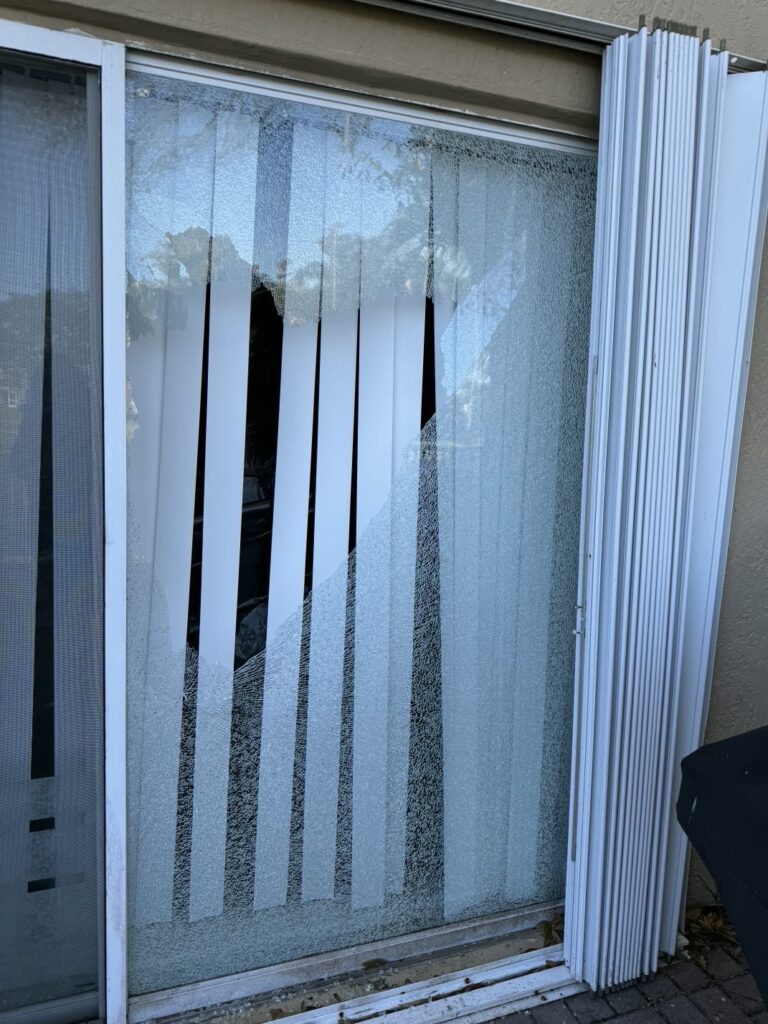
There is always a solution when dealing with a broken sliding glass door. While the situation may initially seem overwhelming—especially when glass is shattered or the door frame appears damaged—most cases can be resolved safely and efficiently with the right process. Understanding the proper steps, safety precautions, and installation techniques is essential to restoring the door’s function, appearance, and security.
The first and most critical step is carefully cleaning up all broken glass before attempting to remove the sliding glass door frame. Broken glass can scatter into small, sharp fragments that are often difficult to see, especially inside the track, frame corners, or weatherstripping. These fragments pose a serious safety risk and can also interfere with the installation of the new glass if not fully removed.
Safety Comes First During Glass Cleanup
Always wear protective gloves and eye protection when handling broken glass. Even experienced technicians take this precaution seriously, as a single overlooked shard can cause injury. Thick work gloves help prevent cuts, while safety glasses protect your eyes from flying fragments during cleanup. Closed-toe shoes and long sleeves are also recommended to reduce the risk of injury.
Thorough cleaning is essential not only for safety but also for the quality of the repair. Glass fragments left behind can prevent the new glass panel from seating properly in the frame, which may result in uneven pressure, improper alignment, or premature breakage. A clean track and frame allow the new glass to sit flush, seal correctly, and operate smoothly once installed.
Vacuuming the track, wiping down the frame, and inspecting corners and channels are all part of a proper cleanup process. Skipping this step can lead to complications later, including difficulty closing the door or damage to rollers and seals.
No Need to Remove Window Shutters in Most Cases
Many homeowners assume that window shutters must be removed in order to repair or replace a sliding glass door. In most cases, this is not necessary. Removing shutters often adds unnecessary labor, increases costs, and raises the risk of damage to surrounding structures such as stucco, siding, or mounting hardware.
Experienced technicians know how to remove and reinstall the sliding glass door frame while keeping the shutters in place. This approach saves time and minimizes disruption to the home. It also reduces the chance of misalignment or cosmetic damage that can occur when shutters are removed and reinstalled improperly.
Keeping the shutters intact is especially important in homes with hurricane protection systems or custom shutter installations. These systems are often precisely fitted, and removing them without necessity can create additional problems or require recalibration.
The Challenge of Reinstalling Glass Without Disturbing Shutters
One of the main challenges in this type of repair is reinstalling the new glass without disturbing the shutter system. This requires precision, proper alignment, and the correct installation sequence. Even small mistakes during this stage can affect how the door operates and seals.
The most effective and commonly used approach is to install the bottom frame first. Once the bottom frame is secured and aligned, the glass can be carefully set onto the track. This step must be done slowly and evenly to avoid placing stress on the glass. After the glass is positioned correctly, the remaining frame components can be rebuilt and aligned.
Proper alignment at this stage is critical. When the frame is not aligned correctly, the door may drag along the track, stick during operation, or place uneven pressure on the rollers. Over time, this can cause premature roller failure or damage to the track itself.
Why Alignment Matters for Long-Term Performance
A sliding glass door relies on balanced weight distribution and smooth roller movement. When alignment is off—even slightly—the door can feel heavy, difficult to slide, or unstable. Uneven wear on rollers is a common result of poor alignment and often leads to repeat service calls that could have been avoided with proper installation.
Correct alignment ensures smooth and quiet operation, even weight distribution across rollers, proper locking and security, and reduced wear on tracks and hardware. Taking the time to align the frame properly during installation pays off in long-term reliability and performance.
Alternative Installation Methods for Certain Situations
In some situations, an alternative installation method may be used. This involves installing the back frame first and then inserting the top frame from the opposite side. This technique can be especially useful in tight spaces or when working around existing shutters or architectural features.
By inserting the glass from an alternate angle, technicians can allow the glass to slide securely into the gasket without forcing it. Forcing glass into place is a common cause of breakage and should always be avoided. Glass must be guided gently and evenly into position to prevent stress points.
Using approved lubricants or sealants during this process can make a significant difference. These materials help the frame seat correctly, reduce friction during installation, and create a tight, weather-resistant seal once the job is complete. Proper sealing also helps prevent water intrusion and air leaks.
The Importance of Weather-Resistant Sealing
A well-sealed sliding glass door protects your home from moisture, drafts, and outdoor noise. Improper sealing can allow water to enter the frame, leading to corrosion, mold growth, or damage to flooring and walls. In humid or coastal environments, this becomes even more important due to frequent exposure to moisture.
Weather-resistant seals also improve energy efficiency by reducing heat transfer and air leakage. This helps maintain consistent indoor temperatures and can lower heating and cooling costs over time.
Functionality and Safety Go Hand in Hand
Proper installation is essential not only for functionality but also for safety. A poorly installed sliding glass door can present several risks, including glass instability, locking issues, and structural weakness. Doors that do not close or lock properly can compromise home security and pose risks to children and pets.
Improperly supported glass panels are more susceptible to cracking or shattering under normal use. Even minor misalignment can place uneven stress on the glass, increasing the likelihood of failure over time.
Professional repair ensures the door operates smoothly, seals correctly, and meets safety standards. Trained technicians understand how to handle glass safely, follow proper installation procedures, and identify potential issues before they become costly problems.
Repair vs. Replacement Considerations
Not every damaged sliding glass door requires full replacement. In many cases, replacing only the broken glass panel or repairing the frame and rollers is sufficient to restore full functionality. Professional evaluation helps determine whether repair or replacement is the most cost-effective and long-lasting solution.
Factors such as frame condition, glass type, door age, and overall performance all play a role in this decision. Choosing the right solution ensures durability, safety, and long-term satisfaction.
The main challenge is reinstalling the glass without removing the shutter, but it can be done.
The simplest method is to:
• Install the bottom frame first only
• Carefully place the glass onto the track
• Rebuild and align the frame on the track
Another method is to install the back frame first, then insert the top frame from the opposite side.
You can use WD-40 to help slide the frame into the glass gasket, or install the upper frame and apply silicone sealant to properly secure and seal the glass in place. (Base on professional experience)