Sliding Glass Door Repair Services in Coconut Creek, Florida
If your sliding glass door is hard to open, makes grinding noises, or feels heavy, our expert technicians can restore it to smooth, like-new operation. We specialize in sliding glass door repair, roller replacement, track repair, lock repair, handle replacement, and complete door restoration for homes and businesses in Coconut Creek, Florida and surrounding South Florida areas.
Most sliding doors fail because the rollers wear out, the track becomes damaged, or debris builds up over time. Instead of replacing the entire door, our team can repair the problem quickly and at a fraction of the cost. We carry high-quality stainless steel rollers, track covers, handles, locks, and hardware to ensure long-lasting performance in Florida’s humid climate.
Additional Sliding Door Services We Offer
Glass replacementhttps://sliding-glass-door-repair.com/coconut-creek/broken-glass-repair (tempered, laminated, and impact glass) Sliding door alignment and adjustment Track cleaning and restoration (remove buildup and corrosion) Track cover installation (snap-on track repair solution) Hurricane/impact door hardware upgrades Lock and latch realignment for better security Weather stripping and seal replacement Sliding door wheel upgrades (heavy-duty stainless steel rollers) Frame repair and minor frame adjustments Sliding screen door repair and replacement Preventive maintenance and tune-ups Emergency sliding door repair services
Door is very heavy or won’t slide Grinding or scraping noises Bent, cracked, or corroded tracks Worn, rusted, or flat rollers Broken handles or locks Doors that jump off the track Sticking or jammed doors Water or air leakage Sliding screen door issues
Our fully stocked service vehicles allow us to complete most repairs on the same visit. Whether you have a standard patio door, impact sliding door, vinyl frame door, or hurricane-grade system, our experienced technicians know how to fix it correctly and efficiently.
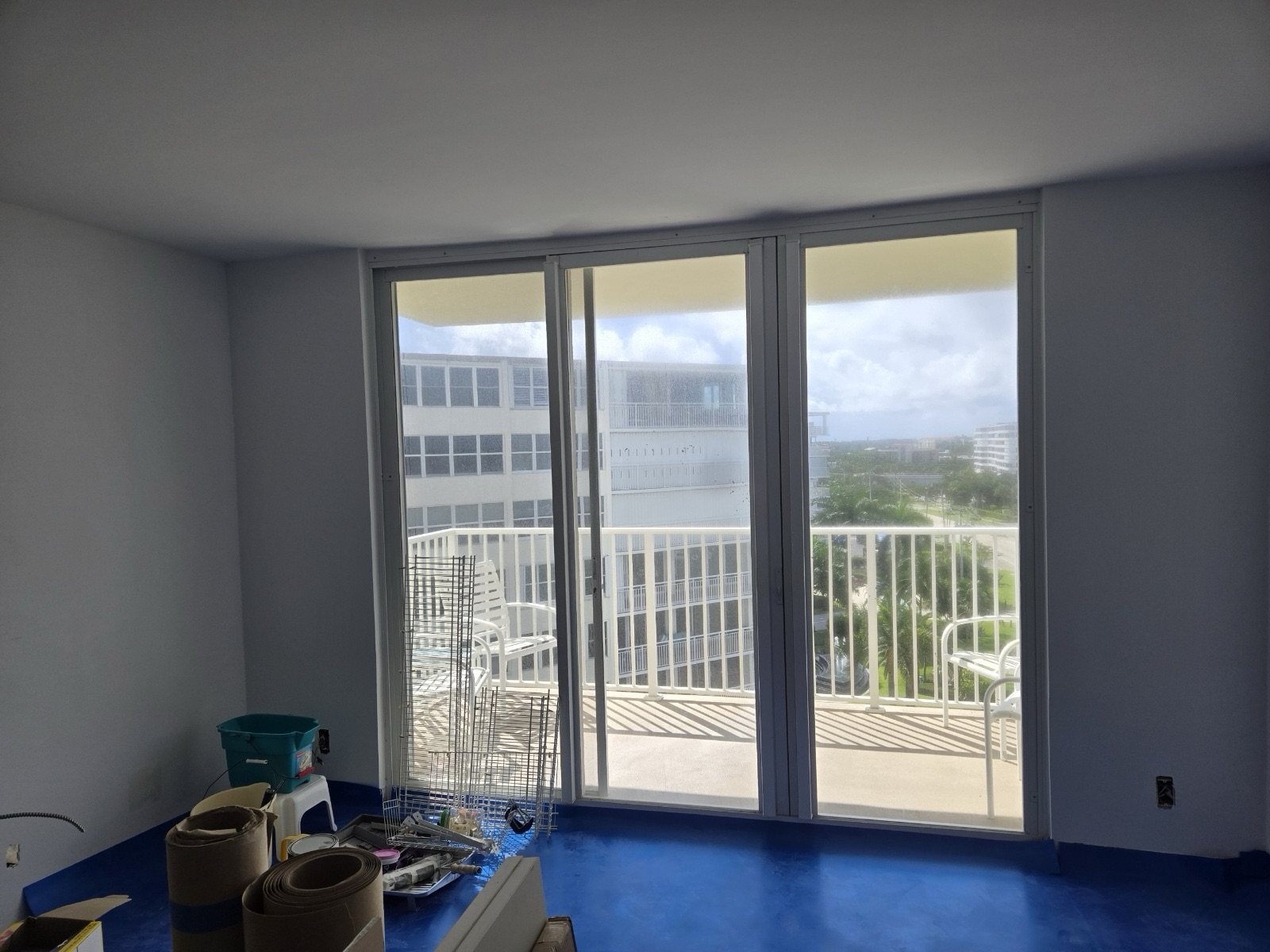
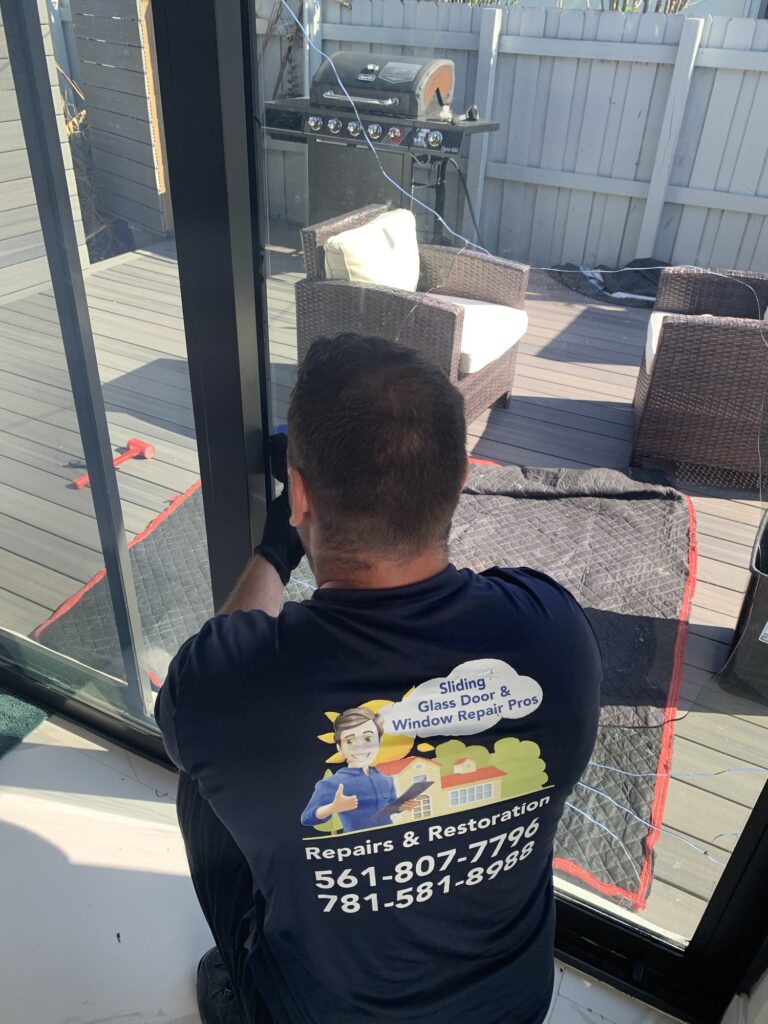
From a technician’s point of view, experience matters—especially when working on large and heavy sliding glass doors. During a recent Pro Home Services job in Boca Raton, our technician encountered an oversized sliding glass door system. These doors are extremely heavy, and even a small mistake can cause serious damage. Broken glass in this type of door is not only dangerous but also very expensive and often custom-made.
Because of the size and weight of the door, the job required two technicians just to handle the panel safely. Having an extra person on site is critical to prevent the door from falling, cracking the glass, or causing injury. Large sliding doors cannot be handled by one person without risking damage to the door or strain to the technician’s back.
In situations like this, we always use proper lifting techniques and high-quality materials to ensure the repair is done correctly the first time. The goal is to minimize risk, avoid breakage, and complete the repair without the need for a return visit. Doing the job right the first time saves time, reduces stress for the homeowner, and prevents costly callbacks.
Additionally, pricing for this type of service must reflect the increased level of difficulty and responsibility. Jobs involving oversized or custom glass doors often require special parts, additional labor, and extra care. For that reason, the original service quote must account for potential complications so there are no surprises later. Proper planning and accurate pricing allow the job to be completed safely, efficiently, and professionally.
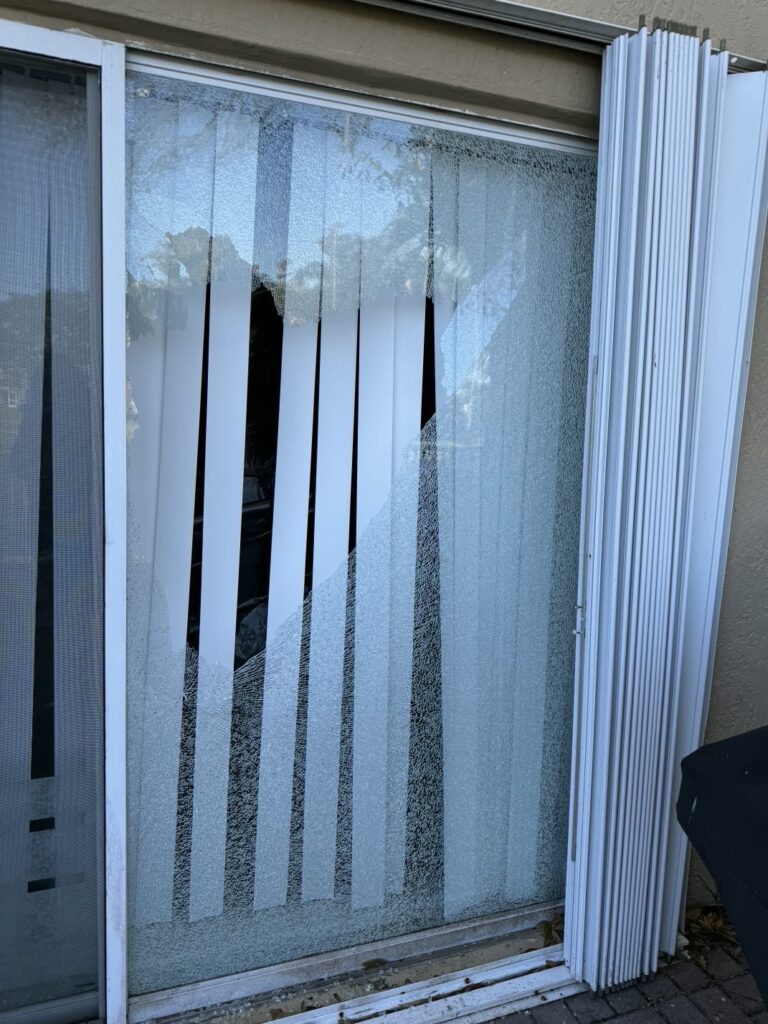
There is always a solution when dealing with a broken sliding glass door. While the situation may initially seem overwhelming—especially when glass is shattered or the door frame appears damaged—most cases can be resolved safely and efficiently with the right process. Understanding the proper steps, safety precautions, and installation techniques is essential to restoring the door’s function, appearance, and security.
The first and most critical step is carefully cleaning up all broken glass before attempting to remove the sliding glass door frame. Broken glass can scatter into small, sharp fragments that are often difficult to see, especially inside the track, frame corners, or weatherstripping. These fragments pose a serious safety risk and can also interfere with the installation of the new glass if not fully removed.
Safety Comes First During Glass Cleanup
Always wear protective gloves and eye protection when handling broken glass. Even experienced technicians take this precaution seriously, as a single overlooked shard can cause injury. Thick work gloves help prevent cuts, while safety glasses protect your eyes from flying fragments during cleanup. Closed-toe shoes and long sleeves are also recommended to reduce the risk of injury.
Thorough cleaning is essential not only for safety but also for the quality of the repair. Glass fragments left behind can prevent the new glass panel from seating properly in the frame, which may result in uneven pressure, improper alignment, or premature breakage. A clean track and frame allow the new glass to sit flush, seal correctly, and operate smoothly once installed.
Vacuuming the track, wiping down the frame, and inspecting corners and channels are all part of a proper cleanup process. Skipping this step can lead to complications later, including difficulty closing the door or damage to rollers and seals.
No Need to Remove Window Shutters in Most Cases
Many homeowners assume that window shutters must be removed in order to repair or replace a sliding glass door. In most cases, this is not necessary. Removing shutters often adds unnecessary labor, increases costs, and raises the risk of damage to surrounding structures such as stucco, siding, or mounting hardware.
Experienced technicians know how to remove and reinstall the sliding glass door frame while keeping the shutters in place. This approach saves time and minimizes disruption to the home. It also reduces the chance of misalignment or cosmetic damage that can occur when shutters are removed and reinstalled improperly.
Keeping the shutters intact is especially important in homes with hurricane protection systems or custom shutter installations. These systems are often precisely fitted, and removing them without necessity can create additional problems or require recalibration.
The Challenge of Reinstalling Glass Without Disturbing Shutters
One of the main challenges in this type of repair is reinstalling the new glass without disturbing the shutter system. This requires precision, proper alignment, and the correct installation sequence. Even small mistakes during this stage can affect how the door operates and seals.
The most effective and commonly used approach is to install the bottom frame first. Once the bottom frame is secured and aligned, the glass can be carefully set onto the track. This step must be done slowly and evenly to avoid placing stress on the glass. After the glass is positioned correctly, the remaining frame components can be rebuilt and aligned.
Proper alignment at this stage is critical. When the frame is not aligned correctly, the door may drag along the track, stick during operation, or place uneven pressure on the rollers. Over time, this can cause premature roller failure or damage to the track itself.
Why Alignment Matters for Long-Term Performance
A sliding glass door relies on balanced weight distribution and smooth roller movement. When alignment is off—even slightly—the door can feel heavy, difficult to slide, or unstable. Uneven wear on rollers is a common result of poor alignment and often leads to repeat service calls that could have been avoided with proper installation.
Correct alignment ensures smooth and quiet operation, even weight distribution across rollers, proper locking and security, and reduced wear on tracks and hardware. Taking the time to align the frame properly during installation pays off in long-term reliability and performance.
Alternative Installation Methods for Certain Situations
In some situations, an alternative installation method may be used. This involves installing the back frame first and then inserting the top frame from the opposite side. This technique can be especially useful in tight spaces or when working around existing shutters or architectural features.
By inserting the glass from an alternate angle, technicians can allow the glass to slide securely into the gasket without forcing it. Forcing glass into place is a common cause of breakage and should always be avoided. Glass must be guided gently and evenly into position to prevent stress points.
Using approved lubricants or sealants during this process can make a significant difference. These materials help the frame seat correctly, reduce friction during installation, and create a tight, weather-resistant seal once the job is complete. Proper sealing also helps prevent water intrusion and air leaks.
The Importance of Weather-Resistant Sealing
A well-sealed sliding glass door protects your home from moisture, drafts, and outdoor noise. Improper sealing can allow water to enter the frame, leading to corrosion, mold growth, or damage to flooring and walls. In humid or coastal environments, this becomes even more important due to frequent exposure to moisture.
Weather-resistant seals also improve energy efficiency by reducing heat transfer and air leakage. This helps maintain consistent indoor temperatures and can lower heating and cooling costs over time.
Functionality and Safety Go Hand in Hand
Proper installation is essential not only for functionality but also for safety. A poorly installed sliding glass door can present several risks, including glass instability, locking issues, and structural weakness. Doors that do not close or lock properly can compromise home security and pose risks to children and pets.
Improperly supported glass panels are more susceptible to cracking or shattering under normal use. Even minor misalignment can place uneven stress on the glass, increasing the likelihood of failure over time.
Professional repair ensures the door operates smoothly, seals correctly, and meets safety standards. Trained technicians understand how to handle glass safely, follow proper installation procedures, and identify potential issues before they become costly problems.
Repair vs. Replacement Considerations
Not every damaged sliding glass door requires full replacement. In many cases, replacing only the broken glass panel or repairing the frame and rollers is sufficient to restore full functionality. Professional evaluation helps determine whether repair or replacement is the most cost-effective and long-lasting solution.
Factors such as frame condition, glass type, door age, and overall performance all play a role in this decision. Choosing the right solution ensures durability, safety, and long-term satisfaction.
The main challenge is reinstalling the glass without removing the shutter, but it can be done.
The simplest method is to: • Install the bottom frame first only • Carefully place the glass onto the track • Rebuild and align the frame on the track
Another method is to install the back frame first, then insert the top frame from the opposite side. You can use WD-40 to help slide the frame into the glass gasket, or install the upper frame and apply silicone sealant to properly secure and seal the glass in place. (Base on professional experience)
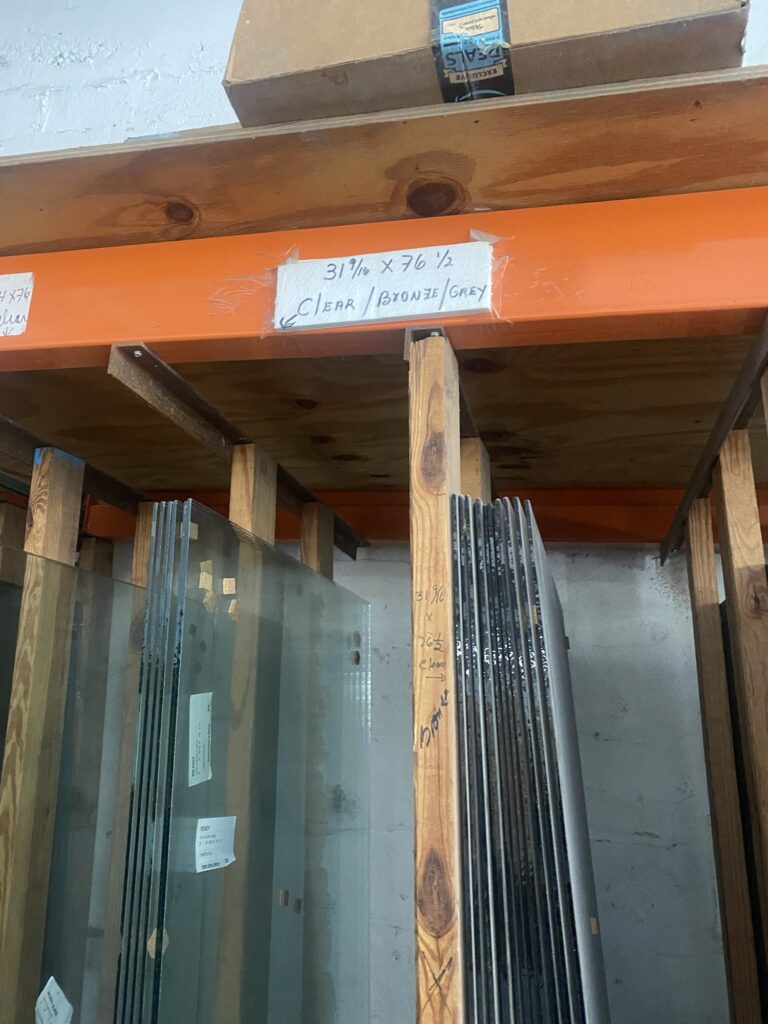
If you need a local glass supplier, you can check this company in Hialeah. They provide all types of glass.
You can purchase the glass directly from them, and we can handle the repair or installation for you.
You can find all kinds of glass.
Basic Tempered Glass Types
Clear Tempered Glass Standard safety glass Most common for windows, doors, storefronts Tinted Tempered Glass Bronze Gray Green Blue Reduces glare and heat Low-Iron Tempered Glass (Ultra-Clear) Very clear, no green edge Used in high-end homes, showers, displays
🔹 Privacy & Decorative Tempered Glass
Frosted / Acid-Etched Tempered Glass Privacy with light transmission Bathrooms, offices Patterned / Textured Tempered Glass Obscure, Rain, Reeded, Satin, etc. Often used where privacy is needed Ceramic Frit Tempered Glass Printed dots, lines, or patterns baked into glass Commercial buildings, railings, spandrel areas
🔹 Safety & Specialty Tempered Glass
Heat-Soaked Tempered Glass Tested after tempering Reduces spontaneous breakage Common in commercial projects Fully Tempered Glass Breaks into small cubes Standard code-approved safety glass Tempered Laminated Glass Two tempered panes bonded with PVB or SGP Breaks safely AND stays in place Used for hurricane impact systems
Here are some glass manufacturers and suppliers in the Tampa Bay area. You can purchase the glass directly from them, and we will handle the installation for you.
West Coast Glass & Mirror – Tampa, FL Binswanger Glass – Tampa, FL Architectural Glass Services, Inc. – Tampa, FL Glass Doctor of Tampa Bay – Tampa Bay, FL Custom Glass & Mirror of Tampa Bay – Clearwater, FL Apex Glass & Mirror – St. Petersburg, FL
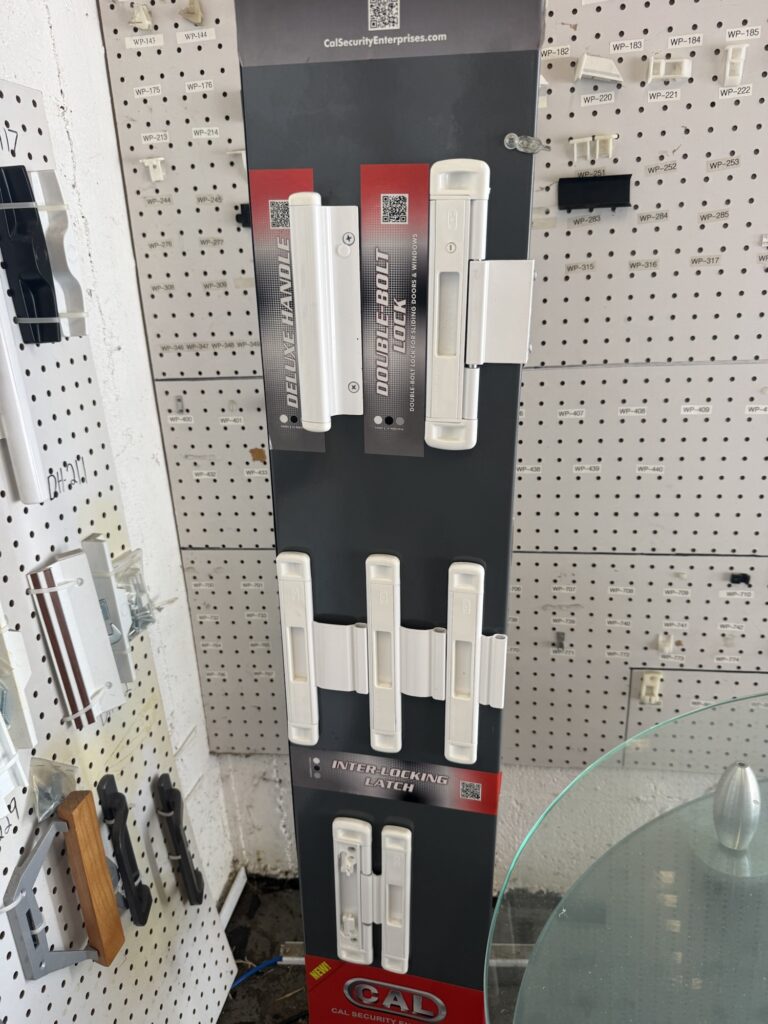
A deadbolt is a great idea as an additional lock for a sliding glass door. It can be installed either on the top or the bottom of the door.
These locks are very practical and are among the best deadbolt options for sliding doors. There are different types—some use a simple hook, while others use a pin that goes inside the door, which requires drilling a hole. This older pin-style lock is not recommended and was commonly used many years ago.
The extra lock is mainly for added peace of mind and improved child safety. We know that if someone really wants to break the glass, even ten deadbolts won’t stop them—but having one extra lock is still a good safety measure.
There are many reasons a sliding glass door can become hard to slide, and in most cases the problem gets worse over time if it is not addressed correctly. Homeowners often try quick fixes that seem helpful at first but actually cause more damage in the long run. Understanding the real causes is the first step toward a proper, long-lasting solution.
One of the most common reasons a sliding glass door becomes difficult to open or close is worn-out rollers. Rollers are the small wheels located at the bottom of the door panel, and they carry the full weight of the glass. Over time, these rollers wear down, crack, rust, or flatten, especially in humid or coastal environments. When the rollers are “shot,” the door no longer glides smoothly on the track. Instead, it drags, sticks, or requires excessive force to move. This is the number one issue seen in older sliding glass doors and even in newer doors that were built with low-quality roller assemblies.
A common mistake many people make is greasing the track in an attempt to make the door slide more easily. While this may feel like it helps at first, greasing actually makes the problem worse. Grease attracts dirt, sand, dust, and debris, especially in homes near the beach or high-traffic areas. Once dirt mixes with grease, it turns into a sticky residue that builds up on the track and rollers. This buildup increases friction instead of reducing it, causing the door to become even harder to slide over time. In many cases, doors that were once repairable with simple roller replacement end up needing more extensive service because of excessive grease buildup.
Another frequent issue is debris inside the track. Dirt, sand, pet hair, and small stones collect in the bottom track and interfere with the rollers’ ability to roll properly. Even high-quality rollers cannot function correctly if the track is clogged. When debris is ignored, the rollers are forced to ride unevenly, which accelerates wear and can cause them to break prematurely. Regular cleaning of the track with a vacuum and mild cleaner is essential, but cleaning alone will not fix worn or damaged rollers.
In some situations, the sliding door may have come off track slightly. This can happen due to improper installation, settling of the home, or worn rollers that no longer hold the door at the correct height. When a door is off track, it may drag against the frame or scrape the floor, creating resistance when opening or closing. This dragging can damage the track, the frame, and even the flooring beneath the door. Left unaddressed, this issue can turn a simple adjustment into a costly repair.
Another important factor is the weight of the glass. Many sliding glass doors, especially impact-rated or double-pane doors, are extremely heavy. In some cases, the original door supplier installs standard or low-grade rollers that are not designed to support the long-term weight of the glass. Over time, these default rollers fail under the load, even if the door is relatively new. Heavier doors require high-capacity rollers, often with stainless steel housings and ball bearings designed to handle the extra weight. Using the wrong type of roller will result in repeated failures and ongoing sliding issues.
Environmental conditions also play a major role. In humid climates, moisture can cause metal components to rust and corrode. Salt air near coastal areas accelerates this process even further. Rusted rollers do not roll smoothly, and corrosion can cause them to seize completely. Additionally, aluminum tracks can develop grooves or dents from years of friction caused by damaged rollers. Once the track itself is worn, even new rollers may not perform correctly unless the track is repaired or replaced.
Improper adjustments are another overlooked cause. Sliding glass doors are designed with height adjustment screws that allow the door to be raised or lowered slightly. If these adjustments are incorrect, too much weight may be placed on one roller instead of being evenly distributed. This imbalance leads to uneven wear and poor performance. Proper alignment ensures the door glides smoothly and prevents unnecessary stress on the hardware.
It is also important to understand that sliding glass doors are not maintenance-free. Over time, components naturally wear out, just like brakes on a car. Ignoring early warning signs, such as resistance, noise, or uneven movement, often leads to more severe damage. Many homeowners wait until the door becomes nearly impossible to move, at which point repairs are more complicated and expensive.
In summary, a sliding glass door can be hard to slide for many reasons, but the most common causes include worn rollers, improper greasing, debris buildup, doors coming off track, and glass that is too heavy for the original rollers. While temporary fixes may seem appealing, they often make the situation worse. The correct solution usually involves proper inspection, correct roller selection, precise adjustment, and clean, well-maintained tracks. Addressing the root cause early ensures smooth operation, extends the life of the door, and prevents unnecessary damage in the future.
Repairing Sliding Glass Door
How much does it cost to fix a patio sliding glass door in South Florida?
It really depends on whether you hire a local company or a nationwide company, and this can make a significant difference in cost.
When you hire a local company, it is often family-owned and operated. Local businesses usually have lower overhead and focus on long-term customer relationships, which often results in more fair and transparent pricing.
In contrast, large nationwide companies typically operate very differently. Their technicians often work on commission, which means the final price is usually much higher. In some cases, the cost can be two to three times more than what a local company would charge.
For example, if a repair costs $250 with a local company, the same repair could cost $750 when performed by a nationwide service provider.
Why is my sliding glass door making noise when I open it?
The rollers may be loose or detached from their base, causing movement and noise when the door slides. The aluminum door frame may be rubbing against another aluminum surface, and there is no plastic guide or insert to keep the metal parts separated. The track may be loose or misaligned, which can create vibration and grinding noises during operation.
Hurricane sliding glass door handles are very unique.
They come in a variety of shapes and typically in three colors: black, bronze, and white. Finding the correct handle can be tricky because many of them look the same but must be 100% compatible to properly fit your door.
Our professionals can source the correct handle through multiple suppliers, saving you time and frustration.
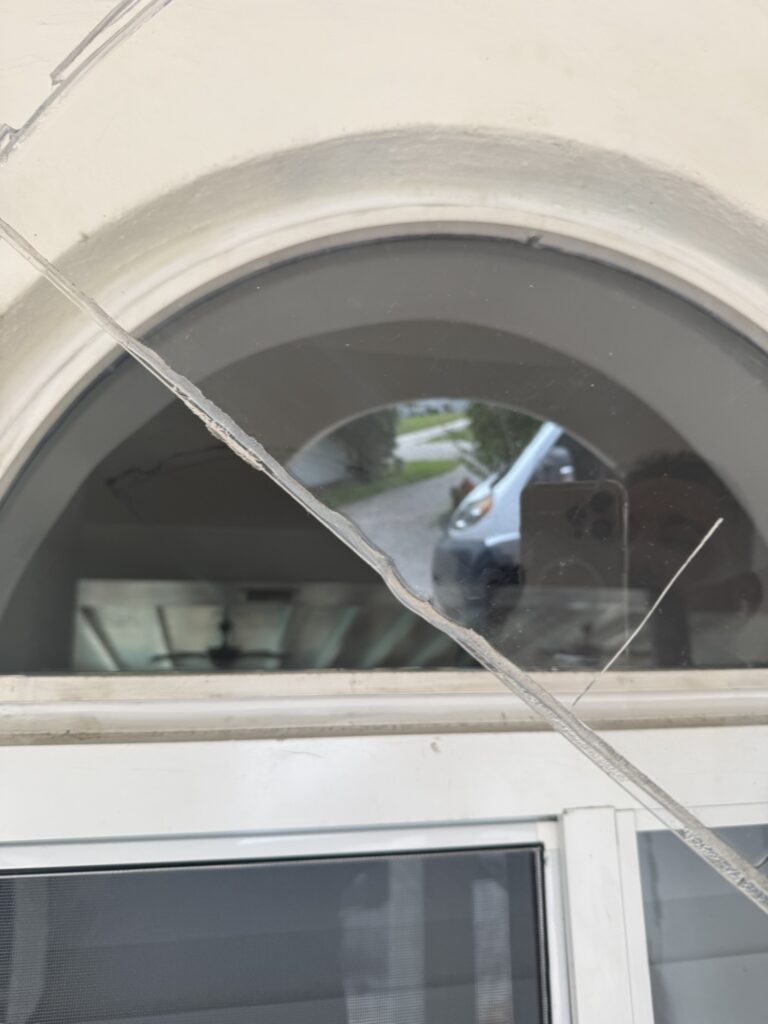
A half-circle window is not cut with a regular knife. It is mainly a special-order item.
You can always install temporary plexiglass and use different cutting methods as a short-term solution.
In Pembroke Pines, Florida, there is no factory that fabricates this type of window on demand, but you can find local suppliers that sell plexiglass to use temporarily while you wait for the permanent window to be ordered and fabricated.